

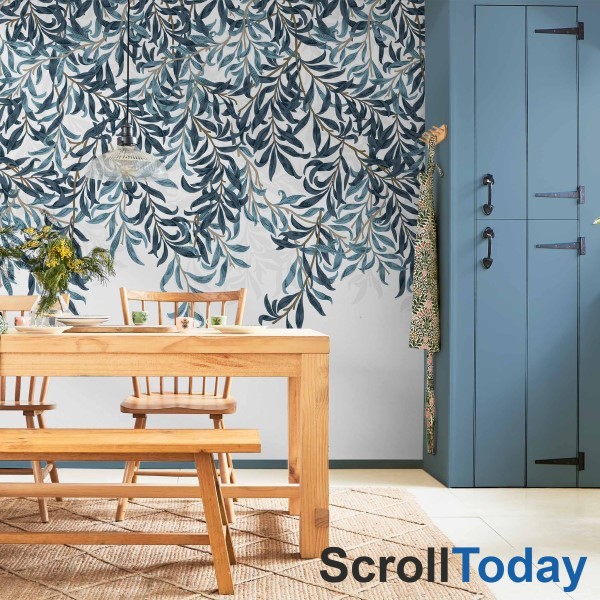
William Morris wallpaper has outlasted nearly every design trend since the Victorian era, and it’s not hard to see why. The intricate florals, birds and foliage still feel fresh in modern homes, whether printed on a feature wall or tucked into a downstairs cloakroom. This guide walks through the history, the most popular patterns, and everything you need to know before buying William Morris wallpaper for your own home.
Who Was William Morris and Why Does His Wallpaper Still Matter?
William Morris (1834–1896) was a designer, poet, and committed socialist who believed beautiful objects should be part of everyday life rather than locked away in galleries. That philosophy shaped everything he made, including his wallpaper, which he wanted ordinary households to enjoy rather than reserve for stately homes.
Working first with Morris, Marshall, Faulkner and Company from 1862 and later under Morris & Company, he designed forty-one wallpapers and five ceiling papers over his career. Many of these designs came directly from his own garden. Some patterns, including Trellis and Garden Tulip, were drawn from plants growing in his own garden, while others like Willow Bough were inspired by wild flowers and trees he saw on country walks.
Today, Morris & Co (now part of Sanderson Design Group, which acquired the company in 1940) continues to produce these designs using updated printing methods, keeping the originals faithful to Morris’s intent while making them accessible for contemporary homes.
The Most Popular William Morris Wallpaper Designs
Not every Morris pattern suits every room. Understanding what each design represents helps narrow down the right choice quickly.
Strawberry Thief
This is the design most people picture when they think of William Morris wallpaper. Morris designed Strawberry Thief in 1881 after watching a thrush steal strawberries from his garden at Kelmscott Manor. The pattern typically appears in dusty pinks and forest greens with ornate detailing of birds, fruit and foliage, though darker colourways with deep blue backgrounds are also widely available.
Willow Bough
A quieter, more restrained option. First produced in 1887, Willow Bough features interlaced green willow leaves and brown stems over a cream ground, and it’s worth distinguishing from the earlier, flatter “Willow” design from 1885. Remarkably, it remains one of the best-selling wallpapers in Britain more than 130 years after its release.
Pimpernel
Designed in 1876, this pattern broke from the era’s obsession with exotic Chinese and Japanese motifs. Morris deliberately chose to render an indigenous British plant instead, and the result still hangs in historic interiors including Kelmscott Manor and Two Temple Place in London.
Snakeshead
Less commonly chosen but worth knowing about. Named after the snake’s head fritillary, a wildflower with chequered drooping petals, this 1876 design feels stranger and more gothic than Morris’s sweeter patterns.
Comparing the Key Designs
| Design | Year | Mood | Best Room |
|---|---|---|---|
| Strawberry Thief | 1881 | Whimsical, busy | Living room, dining room |
| Willow Bough | 1887 | Calm, understated | Bedroom, hallway, home office |
| Pimpernel | 1876 | Naturalistic, dense | Study, formal reception rooms |
| Snakeshead | 1876 | Gothic, unusual | Small statement spaces, cloakrooms |
| Acanthus | 1875 | Bold, large-scale | Feature walls with high ceilings |
Choosing the Right William Morris Wallpaper for Your Home
Match the Pattern Scale to the Room Size
Large, dense patterns like Acanthus need space to breathe and can overwhelm a small room. Willow Bough works far better in compact spaces precisely because it’s quieter and less demanding on the eye.
Consider the Colourway Carefully
Most William Morris wallpaper designs come in multiple colourways, and this changes the mood significantly. A Strawberry Thief pattern on a dark blue or slate background feels moody and dramatic, while the same design on a pale ivory ground reads as light and traditional.
Think About Lighting Direction
Darker colourways can make north-facing rooms feel cave-like without enough natural light, whereas south-facing rooms handle deep, saturated patterns beautifully. Always request a physical sample before committing to a full roll.
Buying William Morris Wallpaper in the UK
If you’re searching for William Morris wallpaper UK stockists, there are a few reliable routes:
- Morris & Co directly – the official source, with the widest range of colourways and the most accurate reproductions
- John Lewis and Sanderson-affiliated retailers – often stock a curated selection of the most popular patterns
- Independent interior design shops – useful for expert advice on colourway matching, though prices can run higher
- Online specialist print shops – some offer Morris-inspired framed prints and fabric alongside wallpaper, useful if you want a coordinated look
Expect to pay more than standard wallpaper, since these designs are typically block-printed or produced using traditional-style methods that preserve the original texture and detail.
What to Check Before You Order
- Roll size and pattern repeat – Morris designs often have large repeats, so measure carefully to avoid running short
- Colourway name, not just the pattern name – ordering “Strawberry Thief” alone isn’t enough; specify the exact colourway
- Paste-the-wall vs paste-the-paper – older stock and newer reprints sometimes differ in application method
- Lead times – specialist prints can take longer to arrive than standard wallpaper, particularly around peak renovation seasons
Frequently Asked Questions
Is William Morris wallpaper expensive? Yes, generally. Original Morris & Co designs cost more than typical wallpaper due to the printing detail and licensing, though budget-friendly reproductions exist from other retailers.
What is the most popular William Morris wallpaper design? Strawberry Thief remains the most recognised and requested design, though Willow Bough holds the title of one of Britain’s best-selling wallpapers over the long term.
Can I use William Morris wallpaper in a modern home? Absolutely. Quieter designs like Willow Bough sit comfortably in contemporary interiors, especially when paired with plain walls, pale flooring, and minimal furniture elsewhere in the space.
Where did Morris get inspiration for his wallpaper designs? Mostly from direct observation. Several patterns came from plants in his own garden, while others were inspired by countryside walks and wildlife he encountered near his homes.
Is William Morris wallpaper still made using the original techniques? Some reproductions still use block-printing methods close to the originals, though most commercial rolls today use modern printing technology to keep costs and lead times manageable.
Final Thoughts
William Morris wallpaper has earned its lasting popularity by staying true to something simple: nature observed closely and rendered with genuine craftsmanship. Whether you choose the whimsy of Strawberry Thief or the calm restraint of Willow Bough, these patterns bring more than a century of design history into a single roll of paper.
Before you commit to a full room, order physical samples in your preferred colourway and view them under your own lighting at different times of day. It’s a small step that saves considerable disappointment and with a pattern this iconic, it’s worth getting right the first time.
