

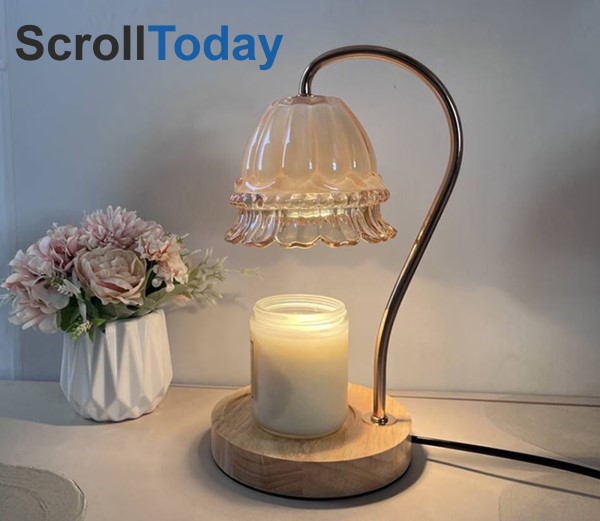
A candle warmer has quietly become one of the most popular home fragrance solutions in the UK, offering the same cosy scent as a traditional candle without the open flame. If you’ve been searching for a safer, more economical way to enjoy your favourite scents, a candle warmer might be exactly what your home needs. This guide covers everything from how they work to which type suits your space best.
Whether you’re curious about candle warmer lamp designs or wondering if your existing candles will even work with one, this article answers the questions people actually ask before buying.
What Is a Candle Warmer and How Does It Work?
A candle warmer uses gentle heat, usually from a light bulb or ceramic plate, to melt the wax and release fragrance without ever lighting a wick. Unlike a traditional flame, this method heats the wax evenly from below or above, allowing scent to disperse steadily throughout a room.
Most designs fall into two categories: electric plate warmers that sit beneath a jar candle, and candle warmer lamp styles that use a bulb positioned above the wax. Both achieve the same result through different heating mechanisms.
Why People Are Switching from Traditional Candles
Naked flames pose obvious risks around children, pets, and curtains, which explains why interest in candle warmers has grown steadily across UK households. There’s also a practical financial benefit, since wax melts far more slowly under gentle heat than it burns away with a flame.
Many users also report that scent throw feels more consistent with a candle warmer, as the wax releases fragrance oils gradually rather than in short bursts tied to flame intensity.
Types of Candle Warmers Available in the UK
Understanding the different styles helps you choose the right one for your space and candle collection.
Plate-Style Warmers
These sit flat and heat the base of a jar candle directly. They work well with standard candles and tend to melt wax evenly across the entire surface.
Candle Warmer Lamp Designs
A candle warmer lamp positions a bulb above the candle, radiating heat downward onto the wax surface. This style often doubles as a decorative lamp, making it popular for living rooms and bedrooms where aesthetics matter as much as function.
Dual-Purpose Warming Stands
Some models combine both plate and lamp heating elements, giving users flexibility depending on candle type or personal preference. These tend to sit at a higher price point but offer more versatility for varied candle collections.
| Warmer Type | Best For | Average Price (£) | Heat Source |
|---|---|---|---|
| Plate warmer | Jar candles | 15 – 30 | Base heating element |
| Candle warmer lamp | Decorative use | 20 – 45 | Bulb above candle |
| Dual-function stand | Mixed collections | 35 – 60 | Combined |
Do Candle Warmer Candles Need to Be Different?
This is one of the most common questions buyers ask, and the answer is reassuringly simple. Standard jar candles work perfectly well as candle warmer candles, though some brands now sell specifically formulated wax designed to melt more efficiently under low heat.
Soy-based candles tend to perform particularly well with warmers, as their lower melting point releases fragrance faster than paraffin blends. If you’re comparing candles and warmers for the first time, starting with a soy or coconut wax blend is a sensible choice.
Choosing Between a Candle, Candle Warmer, and Wax Melt
Many people ask whether they need a dedicated candle, candle warmer, or simply a wax melt burner instead. The distinction matters: wax melts are designed purely for scent and contain no wick, while a candle, candle warmer combination lets you use existing wicked candles safely without ever lighting them.
If your home already has a collection of scented candles, buying a warmer is far more economical than switching entirely to wax melts.
Safety Considerations Every Buyer Should Know
Although a candle warmer removes the risk of an open flame, it isn’t entirely without precautions. Understanding these helps you use the product safely long-term.
- Never leave a warmer running unattended overnight, even without a flame, as prolonged heat exposure still carries some risk.
- Check wattage compatibility before using bulb-based candle warmer lamp models, as incorrect bulbs can overheat.
- Avoid using cracked or damaged jars, since heat can worsen existing glass weaknesses.
- Keep warmers away from flammable fabrics such as curtains, despite the lack of open flame.
Following basic guidelines like these ensures your candle warmer remains a safe long-term addition to your home.
How Long Do Candle Warmer Candles Last Compared to Burning?
Wax generally lasts significantly longer under gentle warming heat than it does with a lit wick, since evaporation happens more slowly and evenly. Many users report getting up to 30% more use from candle warmer candles compared to traditional burning, though this varies by wax type and warmer wattage.
This efficiency is one of the strongest arguments in favour of switching, particularly for anyone who regularly buys higher-end scented candles.
Choosing the Right Candle Warmer for Your Home
Not every warmer suits every room or lifestyle. Consider these factors before purchasing:
- Room size – Larger spaces benefit from stronger wattage bulbs or dual-plate designs.
- Aesthetic preference – A candle warmer lamp often suits homes wanting a decorative feature alongside function.
- Candle collection – Wide-based jars work better with plate warmers, while narrower jars suit lamp-style designs.
- Budget – Entry-level plate warmers offer excellent value for those simply wanting flame-free fragrance.
Matching the warmer type to your existing candle collection avoids disappointment after purchase.
Frequently Asked Questions
Can I use any candle with a candle warmer? Most jar candles work fine, though very hard waxes may take longer to melt fully compared to softer soy or coconut blends.
Is a candle warmer cheaper to run than burning candles? Yes, generally. Electricity costs for a low-wattage warmer are minimal, and wax lasts considerably longer than it does when burned with a wick.
Does a candle warmer lamp get hot to touch? The bulb area can become warm, so it’s best to handle these lamps by the base rather than near the heating element.
Can I still smell the fragrance properly without a flame? Yes, scent throw is often described as more consistent, since gentle heat releases fragrance steadily rather than in short flame-driven bursts.
Are candle warmers safe to leave in rooms with pets? They’re generally safer than open flames, though supervision is still recommended, particularly with curious pets around bulb-style warmers.
Final Thoughts
A candle warmer offers a genuinely practical alternative to traditional candles, combining safety, cost savings, and consistent fragrance in one simple device. Whether you choose a plate-style warmer or a decorative candle warmer lamp, the switch is straightforward and works with most candles already in your home.
If you’re ready to enjoy flame-free fragrance without sacrificing scent quality, browse a few reputable UK retailers and compare wattage options before buying. Your existing candle collection will likely work perfectly from day one.
