

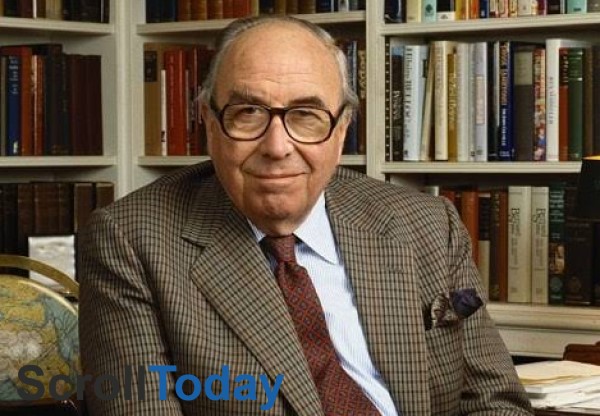
Roy Jenkins lived two remarkable careers in one lifetime. He shaped modern Britain as Home Secretary and Chancellor, then became one of the most respected political biographers of his era. This dual legacy is exactly why so many people searching for Roy Jenkins today are looking for two very different things: the statesman and the author.
This article brings both sides of his story together, covering his political achievements, his acclaimed writing career, and the circumstances of Roy Jenkins’ death in 2003.
Early Life: From Welsh Mining Roots to Oxford
Roy Jenkins was born on 11 November 1920 in Abersychan, Monmouthshire, in south Wales. His father, Arthur Jenkins, was a miners’ union official who later became a Labour MP and served as parliamentary private secretary to Prime Minister Clement Attlee, giving young Roy an early, direct connection to the Labour movement.
He attended Abersychan County Grammar School before briefly studying at Cardiff, then won a place at Balliol College, Oxford, in 1938. There, he took a first-class degree in Politics, Philosophy, and Economics, and became deeply involved in student politics, a clear sign of the direction his life would take.
Wartime Service
Jenkins served in the Royal Artillery during the Second World War, eventually working as an intelligence officer at Bletchley Park. This period gave him a grounding in discipline and analysis that would later shape his approach to both government and historical writing.
Roy Jenkins’ Political Career: A Reformer at the Top
Roy Jenkins entered Parliament in 1948 as the Labour MP for Southwark Central, later representing Birmingham Stechford from 1950. His political rise was steady, but it was his time in Harold Wilson’s government during the 1960s that defined his legacy as a genuine social reformer.
As Home Secretary from 1965 to 1967, Roy Jenkins pushed through a remarkable run of liberalising legislation. His reforms included:
- Effective abolition of capital punishment in Britain
- Decriminalisation of homosexuality
- Relaxation of divorce law
- Liberalisation of abortion law
- Ending of theatre censorship
These changes earned him a reputation as the architect of what he called a “civilised society,” and they still shape British social law today. He went on to serve as Chancellor of the Exchequer from 1967 to 1970, steering the economy through a difficult post-devaluation period.
Founding the SDP
In 1981, frustrated with Labour’s leftward shift, Roy Jenkins broke away to help found the Social Democratic Party, becoming its first leader in 1982. Before that, he’d spent 1977 to 1981 as President of the European Commission, making him one of only a handful of Britons to hold that role.
He later crossed to the Liberal Democrats and took a life peerage in 1987, becoming Lord Jenkins of Hillhead. In 1987, he was also appointed Chancellor of Oxford University, a position he held until his death.
Roy Jenkins Author: A Second, Equally Impressive Career
While many politicians dabble in writing, Roy Jenkins author status was built on genuine literary achievement. He wrote across five decades, and his work is regularly cited as some of the finest political biography produced in Britain during the twentieth century.
In total, Roy Jenkins books number more than twenty, spanning memoir, biography, and political history. His most celebrated titles include:
| Book | Published | Notable Detail |
|---|---|---|
| Asquith | 1964 | Early biographical work, well-received |
| A Life at the Centre | 1991 | His own political memoirs |
| Gladstone | 1995 | Won the Whitbread Prize for Biography |
| Churchill | 2001 | New York Times bestseller |
Why His Writing Still Matters
What made Roy Jenkins author work stand out wasn’t just literary polish, it was insider understanding. Having held some of the same offices as his subjects, particularly Gladstone and Churchill, he brought a practitioner’s eye to political biography that few academic historians could match.
He completed his acclaimed Churchill biography shortly after major heart surgery in 2000, a fact that speaks volumes about his dedication to writing even as his health declined. At the time of his death, he was reportedly beginning research for a biography of Franklin D. Roosevelt.
Roy Jenkins Cause of Death: What Actually Happened
The subject of Roy Jenkins cause of death is one of the most searched aspects of his biography, and the facts are well documented. He died on 5 January 2003 at his home in East Hendred, Oxfordshire, at the age of 82.
He had a long history of heart problems, including a heart valve replacement operation in October 2000. On the morning of his death, he collapsed suddenly at home following a heart attack, with cardiac arrest recorded as the immediate cause.
According to widely reported accounts, his final words to his wife, Jennifer, were a request for two eggs, lightly poached, an oddly ordinary end for a man who had spent his life at the centre of major historical events. His funeral took place on 10 January 2003 at the village church in East Hendred, where he was buried.
Personal Life
Roy Jenkins married Mary Jennifer Morris in 1945, and the couple remained married until his death, raising three children together. Biographical research published after his death, notably by biographer John Campbell, also explored a reported relationship with fellow Oxford student and future Labour Cabinet minister Anthony Crosland during his university years.
Despite the demands of two full careers, colleagues and biographers consistently described Roy Jenkins as someone who maintained a genuine enjoyment of good food, wine, and conversation throughout his life, traits that come through clearly in his own memoirs.
Frequently Asked Questions About Roy Jenkins
What was Roy Jenkins most famous for? He’s best remembered for his liberalising reforms as Home Secretary in the 1960s, and later for founding the Social Democratic Party in 1981.
How many books did Roy Jenkins write? Estimates vary slightly by publisher, but he wrote more than twenty books, including acclaimed biographies of Gladstone and Churchill.
What did Roy Jenkins die of? He died of a heart attack at his Oxfordshire home on 5 January 2003, following a long history of heart problems.
Was Roy Jenkins ever Prime Minister? No. He was widely described as “the best Prime Minister Britain never had,” but he never held the office itself.
What is Roy Jenkins’ most acclaimed book? His 1995 biography of Gladstone is often considered his finest work, winning the Whitbread Prize for Biography.
Final Thoughts
Roy Jenkins built two careers that most people would consider a full life’s work on their own. As a politician, he reshaped British social law and helped found a new political party; as a writer, he produced biographies still regarded as benchmarks of the genre. Understanding Roy Jenkins means appreciating both halves of that story, not just the politics or just the prose, but the rare combination of the two.
If you’re interested in exploring his legacy further, his own memoir, A Life at the Centre, remains one of the most candid political autobiographies ever published, and a genuinely rewarding place to start.
