

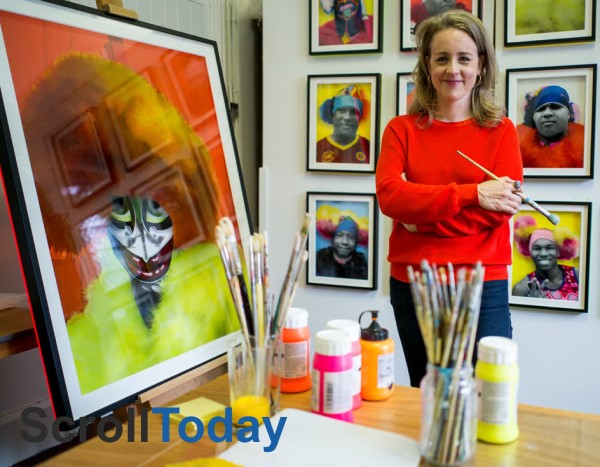
Nicola Green has spent more than two decades building a reputation as one of Britain’s most thoughtful contemporary portrait painters, yet many people still discover her name through a single connection: her marriage to politician David Lammy. That’s a shame, because Nicola Green’s own body of work spanning portraits of Barack Obama, the Dalai Lama and Diana, Princess of Wales stands firmly on its own merits. This article looks at who Nicola Green actually is, what her art explores, and how her personal life intersects with her professional one.
Who Is Nicola Green?
Nicola Green was born in 1972 and trained at Edinburgh College of Art, where she developed the technical grounding that still shapes her work today. She’s a British portrait painter, social historian and public speaker, and her practice sits at the crossroads of fine art and documentary observation. Rather than churning out decorative commissions, Green chooses subjects who carry historical or cultural weight.
Her heritage is notably varied she has Ashkenazi Jewish, Russian Orthodox and Anglican roots, and by her own account she explored atheism and several other faiths before settling back into her Anglican upbringing. That personal journey through identity and belief shows up repeatedly in her art, which often wrestles with questions of faith, heritage and belonging.
Green is also the daughter of the respiratory physician Sir Malcolm Green and the late Julieta Preston, giving her a family background rooted in medicine and academia rather than the art world. She built her artistic career from the ground up, through years of exhibitions, commissions and independent projects rather than inherited connections.
Nicola Green Artist: A Career Built on Portraiture
As a Nicola Green artist profile, her career is defined less by volume and more by depth. She doesn’t produce quick likenesses; she embeds herself in a subject’s world before picking up a brush.
Major Projects and Subjects
Some of the works that established her reputation include:
- In Seven Days… (2010) — a series of seven portraits and accompanying works following Barack Obama’s 2008 presidential campaign, created after Green was given close access to document the historic election.
- Portraits of the Dalai Lama — reflecting her long-standing interest in spiritual leadership and religious identity.
- Diana, Princess of Wales — a subject that let Green explore themes of public image versus private life, something she’s arguably lived through herself.
Green has twice been shortlisted for the BP Portrait Award at the National Portrait Gallery in London, in 2006 and again in 2008, cementing her standing within the UK’s competitive portraiture scene well before her husband’s political profile grew to its current height.
Themes That Run Through Her Work
Nicola Green’s art consistently returns to a handful of preoccupations:
- Cultural and religious heritage — she has spoken about creating work inspired by her own mixed-heritage children and multi-faith family, aiming to preserve social and cultural memory for future generations.
- Historic moments — she gravitates towards subjects at pivotal points in public life, treating painting almost as a form of social history.
- Presence over spectacle — her portraits tend to favour quiet intensity rather than dramatic flourish, letting the sitter’s character carry the piece.
This combination of technical skill and conceptual depth is why serious collectors and gallery curators, not just tabloid readers, take Nicola Green seriously as an artist.
David Lammy and Nicola Green: How They Met and Married
The relationship between David Lammy and Nicola Green began at Harvard University in the United States, where both were studying. They married in 2005, at a point when Lammy was already an established Labour MP and Green was building her own artistic practice.
David Lammy has been notably vocal about supporting his wife’s career. In a 2020 interview, he said he was in love with both his wife and her art a comment that captures how closely the couple’s public and creative lives have intertwined over the years. Rather than stepping back from her craft after marrying a rising political figure, Green expanded her output, producing some of her most ambitious projects during the years Lammy’s own career accelerated.
David Lammy has since gone on to hold senior roles including Secretary of State for Justice, Lord Chancellor, and Deputy Prime Minister. Throughout his rise, Green has kept her identity distinct recognised in art circles for her own achievements rather than simply as a political spouse.
Family Life
David Lammy and Nicola Green have three children two sons and a daughter. Lammy has written publicly about adopting their daughter, describing it, alongside the births of their sons, as among the most meaningful decisions of his life. Green has said that her children’s mixed-race heritage directly informs her artistic choices, feeding into her ongoing interest in identity and belonging.
The couple’s family life clearly threads through Green’s professional output. Her official artist statement notes that she draws on her mixed-heritage children and multi-faith household to create work that preserves religious, social and cultural heritage a theme collectors and critics regularly point to when discussing her practice.
Nicola Green’s Public Profile and Recent Attention
Nicola Green’s visibility has grown alongside her husband’s political career, and that’s brought both opportunities and scrutiny. Her connections through Lammy’s diplomatic and political work have opened doors to high-profile subjects, including access surrounding the Obama presidential library opening in Chicago, where she was reported to have engaged with attendees about potential commissions.
This kind of access is a genuine advantage for any portrait artist proximity to influential people has shaped the careers of court painters for centuries. It’s also drawn some criticism from commentators who question whether her marriage gives her an unfair commercial edge. That tension is worth acknowledging honestly: Nicola Green’s marriage undeniably opens doors that wouldn’t be available to most artists, even as her technical skill and long exhibition history suggest she’d have built a serious career regardless.
Nicola Green vs Other Political Spouses Who Are Artists
| Artist | Political Connection | Primary Medium | Known For |
|---|---|---|---|
| Nicola Green | Wife of David Lammy | Portrait painting | Obama, Dalai Lama, Princess Diana portraits |
| Anthony Green (unrelated) | N/A | Narrative painting | Autobiographical works with wife Mary as muse |
| Various diplomatic-spouse artists | Varies | Mixed | Typically less commercially prominent |
This comparison highlights something important: few political spouses in the UK have built an independent artistic reputation to the extent Nicola Green has. Her exhibition history and awards recognition predate much of her husband’s cabinet-level prominence.
Frequently Asked Questions About Nicola Green
Is Nicola Green a professional artist? Yes. Nicola Green is a British portrait painter and social historian with a career spanning more than two decades, including shortlisting for the BP Portrait Award.
How did David Lammy and Nicola Green meet? David Lammy and Nicola Green met while studying at Harvard University and married in 2005.
What is Nicola Green best known for? She’s best known for In Seven Days…, her portrait series documenting Barack Obama’s 2008 presidential campaign, alongside portraits of the Dalai Lama and Diana, Princess of Wales.
Does Nicola Green have children with David Lammy? Yes, David Lammy and Nicola Green have three children — two sons and an adopted daughter.
Where did Nicola Green train as an artist? Nicola Green trained at Edinburgh College of Art.
Final Thoughts on Nicola Green
Nicola Green deserves recognition as a serious portrait artist in her own right, not merely as a footnote to her husband’s political career. Her work on figures like Barack Obama and the Dalai Lama shows genuine ambition and technical range, while her personal story spanning mixed heritage, shifting faith and a long marriage to David Lammy gives her art a depth that goes beyond surface likeness. Whether you first heard her name through David Lammy and Nicola Green’s public partnership or through her gallery shows, her portfolio makes a strong case for judging her on the paintings themselves. If you’re curious to see more, seeking out her exhibition history or original works is the best next step for anyone genuinely interested in Nicola Green’s contribution to contemporary British portraiture.
