

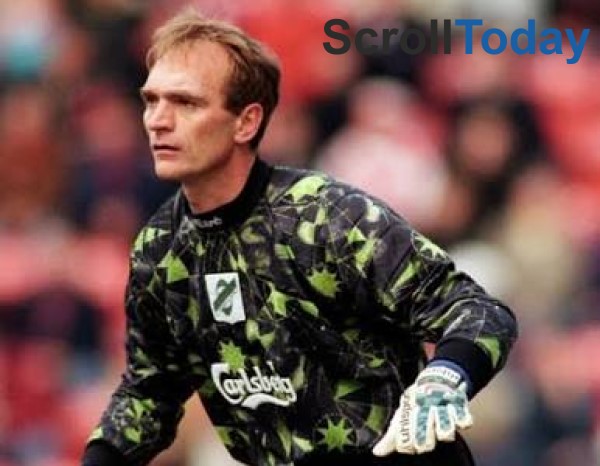
Jim Leighton remains one of the most respected goalkeepers to emerge from Scottish football, and his story stretches from the terraces of Pittodrie to the pressure of an FA Cup Final at Wembley. Jim Leighton built a career spanning more than two decades, collecting silverware, international caps, and a reputation for reliability that few keepers of his era could match. This article covers his playing days, the controversies that shaped his reputation, and where he stands today, including the questions people most often ask about Jim Leighton.
Early Life and Background
James Leighton was born on 24 July 1958 in Johnstone, Renfrewshire, Scotland. He began playing football with local youth sides Eastercraigs Boys Club and Dalry Thistle before earning a move into the professional game. Like many Scottish footballers of his generation, Jim Leighton’s path started far from the bright lights, built instead on grassroots football in the west of Scotland.
His early promise was clear enough that Aberdeen signed him as a teenager, a decision that would shape the next decade of Scottish football history. Few could have predicted just how significant that move would become for both player and club.
Jim Leighton Goalkeeper: The Aberdeen Years
The phrase Jim Leighton goalkeeper became synonymous with Aberdeen’s golden era during the 1980s. He signed for the Dons in 1977 and, after a brief loan spell at Deveronvale, established himself as first-choice goalkeeper under the management of a young Alex Ferguson.
Between 1977 and 1988, Leighton helped Aberdeen dominate Scottish football, and his shot-stopping ability became a cornerstone of the team’s success. His major honours at Pittodrie included:
- Three Scottish league championships
- Four Scottish Cups
- The 1982–83 European Cup Winners’ Cup, including a famous victory over Real Madrid
- Scottish Footballer of the Year, 1984
Brian Clough, never one to hand out easy compliments to goalkeepers, once described him as a rare bird among Scottish keepers, one who could genuinely be relied upon. That endorsement from a manager known for his sharp tongue said everything about the trust Leighton had earned across British football by the mid-1980s.
The Manchester United Move
When Alex Ferguson left Aberdeen to take charge at Manchester United, he made it clear only one goalkeeper would tempt him away from Pittodrie later on. In 1988, Ferguson signed Jim Leighton for a then-record fee of £750,000, reuniting manager and player at Old Trafford.
The early signs were promising. He kept five clean sheets in his first six matches, conceding only once in a narrow defeat at Anfield against Liverpool. However, United’s form dipped afterwards, and results proved harder to come by as the following season, 1989–90, wore on.
The 1990 FA Cup Final Controversy
No discussion of Jim Leighton is complete without addressing the moment that defined, and arguably derailed, his time in England. In the 1990 FA Cup Final against Crystal Palace, Leighton conceded three goals as the match finished 3-3, forcing a replay. Ferguson made the difficult decision to drop him in favour of Les Sealey for the second match, which United won 1-0.
Being dropped for a cup final replay by his own former mentor was a painful moment in Leighton’s career, and reports at the time suggested it strained his relationship with Ferguson considerably. He never played for Manchester United again after that decision, moving on loan to Arsenal and then Reading before leaving Old Trafford permanently.
Rebuilding a Career: Dundee, Sheffield United, and Hibernian
After his United exit, Jim Leighton’s career could have faded quietly, but he chose to rebuild rather than retire. He joined Dundee in 1992, had a loan spell at Sheffield United in 1993, and then made the move that many consider his true career revival: signing for Hibernian later that same year.
At Easter Road, Leighton found his form and confidence again, later describing this period as some of the best football of his career. His performances for Hibernian helped restore his place in the Scotland national team setup, proving that his Old Trafford setback hadn’t diminished his ability between the posts.
Return to Aberdeen and Retirement
In 1997, Jim Leighton returned to Aberdeen for a second spell, closing the loop on a career that had begun there two decades earlier. He passed 500 appearances for the club in 1998 and continued playing into his forties, an achievement that speaks to his fitness and professionalism.
His final match came in the 2000 Scottish Cup Final against Rangers, a game that ended in heartbreaking fashion. Leighton suffered a broken jaw after just three minutes following a challenge from Rod Wallace, and with no substitute goalkeeper available, outfield player Robbie Winters had to fill in as Aberdeen lost 4-0. That final appearance made him the oldest player in Scottish Premier League history at the time, aged 41 years and 302 days.
Jim Leighton Stats: Career Numbers at a Glance
The following table summarises the key statistics behind Jim Leighton’s playing career:
| Club | Years | Notable Achievement |
|---|---|---|
| Aberdeen (1st spell) | 1977–1988 | European Cup Winners’ Cup, 3 league titles |
| Manchester United | 1988–1992 | 1990 FA Cup Final appearance |
| Hibernian | 1993–1997 | Career revival, best form period |
| Aberdeen (2nd spell) | 1997–2000 | Over 500 club appearances |
| Scotland | 1982–1998 | 91 international caps |
Across his entire career, Leighton made more than 600 league appearances and represented Scotland 91 times, figures that place him among the most capped Scottish goalkeepers in history.
International Career with Scotland
Jim Leighton earned 91 caps for Scotland between 1982 and 1998, representing his country across multiple World Cups and European Championship campaigns. His longevity at international level mirrors his club career, marked by consistency rather than flash, which is precisely the quality that made managers trust him for so long.
Jim Leighton Now: Life After Football
People searching for Jim Leighton now are usually curious about how the former goalkeeper has spent his years since retiring in 2000. He was awarded an MBE in recognition of his services to football, a fitting tribute to a career built on dedication rather than headlines.
By his own admission, Leighton has never been one to chase the spotlight. He has largely stayed out of the media since hanging up his gloves, preferring a quieter life away from punditry and public appearances. On the rare occasions he has spoken to journalists, including a notable interview with Mill Magazine, he’s made clear that playing the game he loved and providing for his family always mattered more to him than fame.
Jim Leighton Net Worth: What’s Publicly Known
Questions about Jim Leighton net worth come up frequently, but it’s worth being upfront: there is no verified, publicly confirmed figure available for his current net worth. Unlike modern footballers whose earnings are heavily documented, players from Leighton’s era, particularly in Scottish football, rarely had contract details or earnings made public.
What can be said with confidence is that his record £750,000 transfer to Manchester United in 1988 was a substantial fee for a goalkeeper at the time, and his lengthy career across several top-flight clubs would have provided a stable footballing income across more than two decades. Beyond that, any specific net worth figure circulating online should be treated as estimation rather than confirmed fact.
Frequently Asked Questions
Is Leighton Jim the same person as Jim Leighton? Yes, “Leighton Jim” is simply an inverted search variation of the same name. Some search engines and databases list his surname first, but he is always referred to professionally as Jim Leighton.
What position did Jim Leighton play? He played as a goalkeeper throughout his entire professional career, representing clubs including Aberdeen, Manchester United, Arsenal, Reading, Dundee, Sheffield United, and Hibernian.
Why was Jim Leighton dropped by Manchester United? He was dropped for the 1990 FA Cup Final replay after conceding three goals in the drawn first match against Crystal Palace, with manager Alex Ferguson opting for Les Sealey instead.
How many caps did Jim Leighton earn for Scotland? He earned 91 caps for Scotland between 1982 and 1998, making him one of the most experienced goalkeepers in the nation’s history.
When did Jim Leighton retire from football? He retired in 2000, following his final appearance in the Scottish Cup Final for Aberdeen against Rangers.
Final Word
Jim Leighton’s career tells a story of resilience as much as talent. From European glory with Aberdeen to the highs and lows of Manchester United, and a career revival at Hibernian, he proved time and again that setbacks don’t have to define a footballer’s legacy. His 91 Scotland caps and decades of top-level goalkeeping stand as testament to a player who let his performances, rather than headlines, do the talking. For anyone researching the history of Scottish football, Jim Leighton’s career remains essential reading and a reminder of what quiet consistency can achieve at the highest level.
